1491
The Constant PrincessThe year 1491 marks a decisive turn in the siege of Granada, the Nasrid stronghold: a fire wrecked the Spanish camp, but Isabella of Castile refused to withdraw. Instead, the army endured the labor of rebuilding, raising Santa Fe from the ruins and continuing the siege. For the young Catalina, the year also places the distant business of war within her childhood world, where terror and royal authority stood side by side.
Fire in the Camp
The siege camp outside Granada was consumed in a night of panic. Flames spread from tent to tent, catching silken hangings, standards, guy ropes, and muslin doors; terrified horses neighed as men shouted to calm them, their own fear worsening the tumult. A candle carelessly set had reduced the camp to smoldering hangings, destroyed tents, and heaps of smoky forage. The Spanish army, which had ridden out in confidence to besiege the last great Moorish kingdom in Spain, had to face the prospect of retreat.
Catalina experienced the blaze as a child’s immediate danger rather than a military setback. Waking in her bed, she cried for her mother and asked, “The Moors? Are the Moors coming for us?” The question captures how the siege’s opposing forces entered her life: the Moors were both the feared enemy in a moment of alarm and the people whose kingdom stood just beyond the Christian camp.
Isabella Refuses Retreat
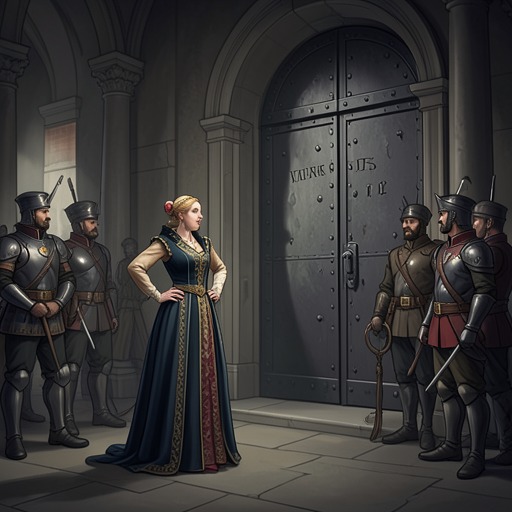
The generals gathered beneath a singed awning among flies swarming over the wreckage. Though the camp was ruined and retreat seemed unavoidable, Isabella of Castile ruled that the army would not turn back. Her decision kept the siege in motion, but the army could not simply resume its advance. It had to rebuild in the heat of the sun and the chill of the evenings, working the fields and sleeping on hard, cold ground.
The challenge was formidable. The red fort above Granada stood on a cliff overlooking a broad plain; its rock face rose into walls that no scaling ladder could reach. It had never fallen in two centuries, and the defenders watched from battlements considered impenetrable. The Christians’ persistence seemed unlikely to overcome those defenses, yet they continued to construct a permanent base under the same conditions that had made their position seem hopeless.
Santa Fe Rises from the Ruins
Construction proceeded by necessity, not ceremony. First came a round chapel, built in a form local builders could make quickly. Then came a small, flat-roofed house within an Arabic courtyard for Ferdinand II of Aragon, Isabella of Castile, and their family, including the infant Catalina. The queen asked for only a roof and walls. Stone shelters for the great lords followed, then stables and secure stores for gunpowder and explosives—supplies Isabella had pawned her own jewels to buy from Venice. Barracks, kitchens, stores, and halls came later.
The scattered camp became a stone town called Santa Fe. Its construction reversed the immediate meaning of the fire: what had appeared to be the end of the army’s effort became the beginning of a more durable siege. The army’s work did not make Granada’s defenses less formidable, but it allowed the Christian rulers to persist. The siege continued from a settlement built where the army had expected only a temporary camp.
Catalina at the Siege
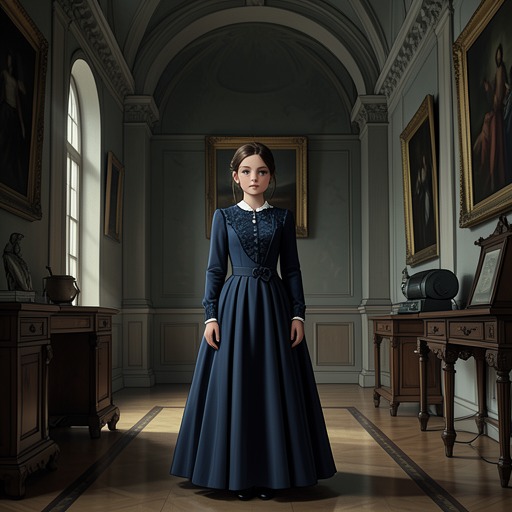
At five, Catalina was already moving through the Spanish camp with the confidence of a child who had seldom been far from her mother. She encountered Hernando Pérez del Pulgar speaking quietly with friends and asked what he was doing. He smiled and told her, “Nothing, Infanta,” an answer that did not end her curiosity. The moment places her among the people and private conversations of the campaign, even as she remained a child under her parents’ protection.
The year’s events establish a contrast that recurs in Catalina’s story: royal certainty does not prevent danger, and apparent disaster does not necessarily end a political undertaking. The fire exposes the vulnerability of the Christian army; Isabella’s refusal and the building of Santa Fe turn endurance into strategy. For Catalina, 1491 is both a memory of fear and an early encounter with the resolve that shaped her family’s rule.